
From implementing our first nuclear engineering project to the delivery of large-scale systems Radics LLC and our parent company RPC Radiy have jointly accumulated valuable experience of more than 25 years and installed more than 55 safety systems that meet the most rigid nuclear requirements. These projects are successful stories meeting the project goals and supplying state-of-the-art-technology to the most demanding of global customers.
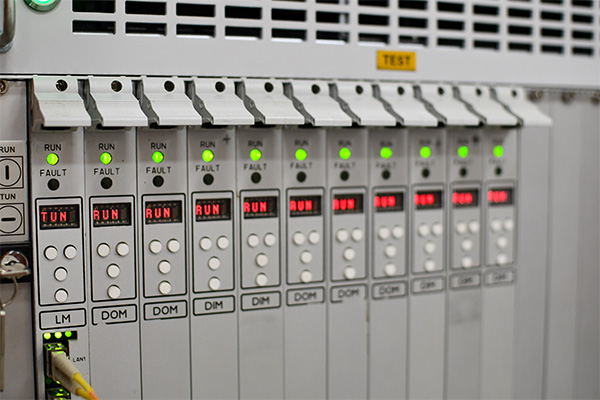
RadICS is a digital safety I&C Platform designed and qualified to meet the most rigid international nuclear requirements. RadICS is modern I&C platform that was first implemented into a commercial nuclear facility in 2011. It is certified to SIL 3 in a single channel configuration and was approved by U.S. Nuclear Regulatory Commission for use in safety related systems at U.S. nuclear facilities.
RadICS is a digital platform based on field programmable gate array (FPGA) technology that is easily adapted to configure different architectures and safety applications. RadICS advanced technology is incorporated in more than 100 safety and control systems in operating nuclear power plants and research reactors.
The Platform consists of general-purpose building blocks that can be used to implement project-specific functions and systems. The system size and architecture are scalable and flexible to fit the typical systems arrangements in operating traditional NPPs, as well as new systems in small modular reactors (SMR) and advanced reactors (AR).
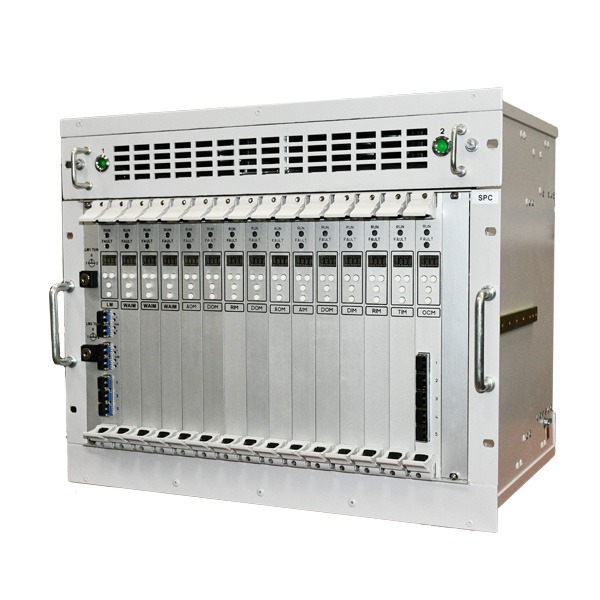
The RadICS Platform incorporates a unique diversity strategy that addresses common cause failure vulnerabilities and does not require a separate actuation system. The self-testing and diagnostic coverage of the system is better than 99%. The fundamental architecture of the RadICS Platform consists of a single instrument chassis containing a logic module, and up to 14 other I/O and fiber-optic communication modules, each based on the use of FPGA chips as computational engines.
|
RadICS Digital I&C Platform Component / Module name |
Purpose |
|
|
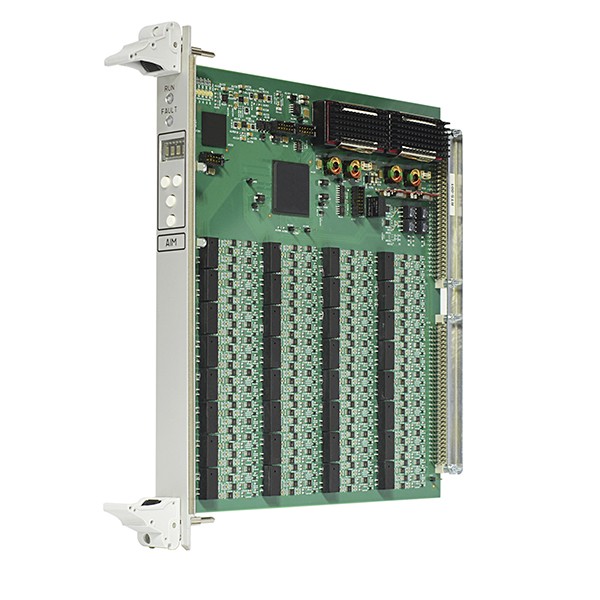
Analog Inputs Module |
AIM |
Receiving DC signals up to 100 mА. |
|
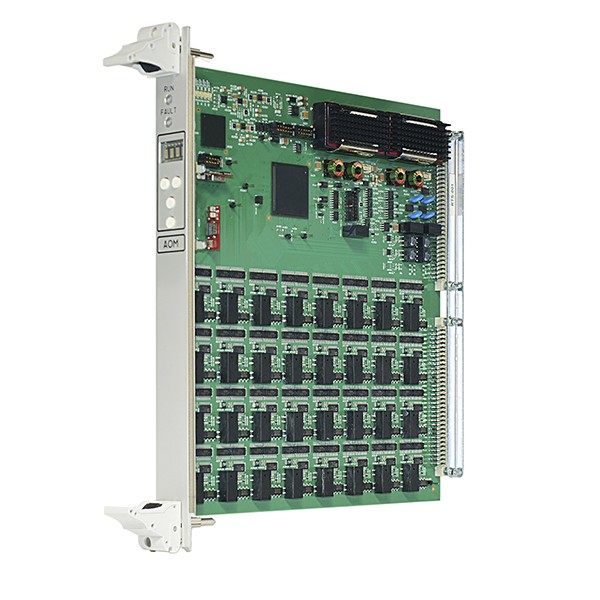
Analog Outputs Module |
AOM |
Generating standard analog output signals, such as DC in the ranges 0-5, 0-20, 4-20 mА into loads up to 50 Ω. |
|
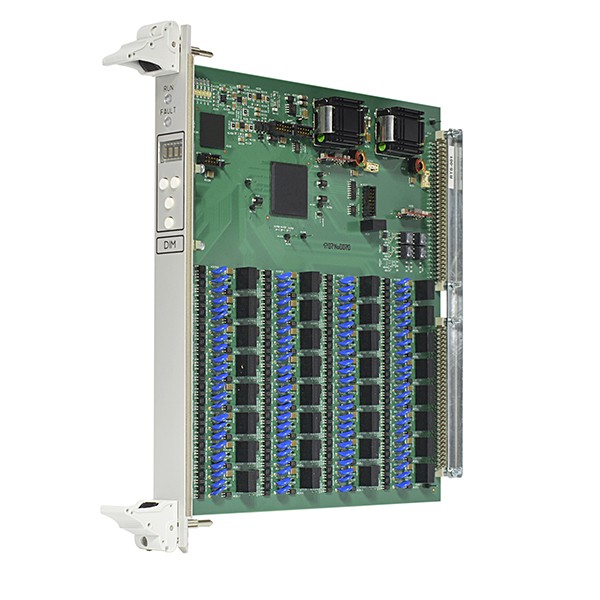
Discrete Inputs Module |
DIM |
Receiving discrete signals of the “dry contact” type with a voltage. of up to 48V. |
|
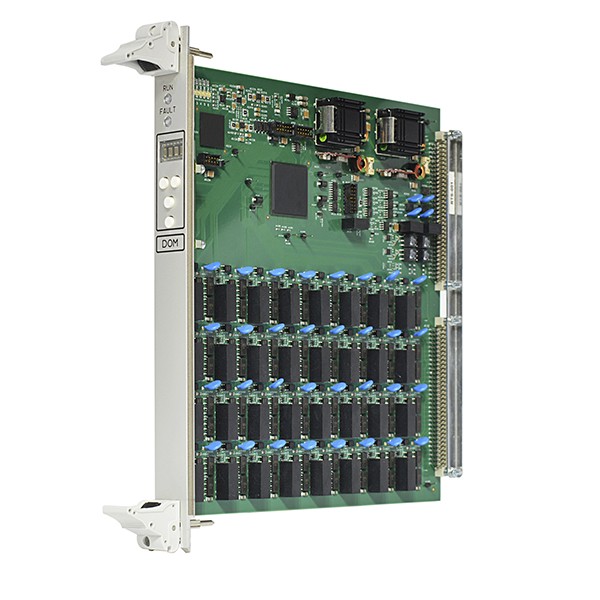
Discrete Outputs Module |
DOM |
Generating discrete signals of the “dry contact” type with a switching capacity of 0,2 A at a voltage of up to 48V. |
|
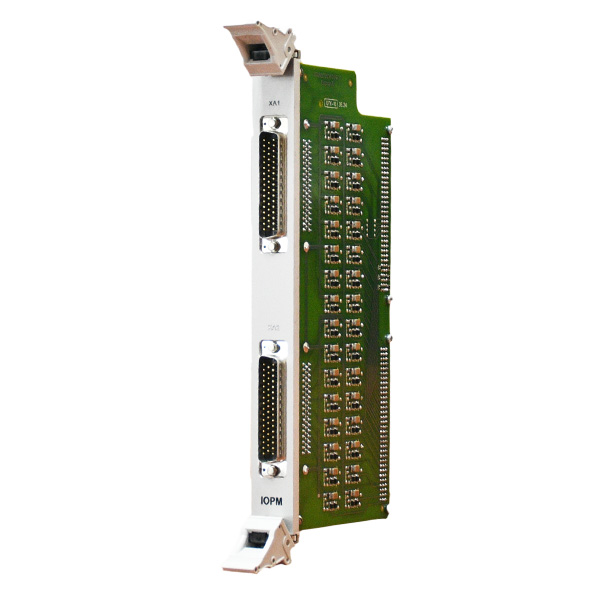
Interface Protection Module |
IOPM |
Providing electromagnetic compatibility and electrical protection for RadICS input, output, and communication modules. |
|
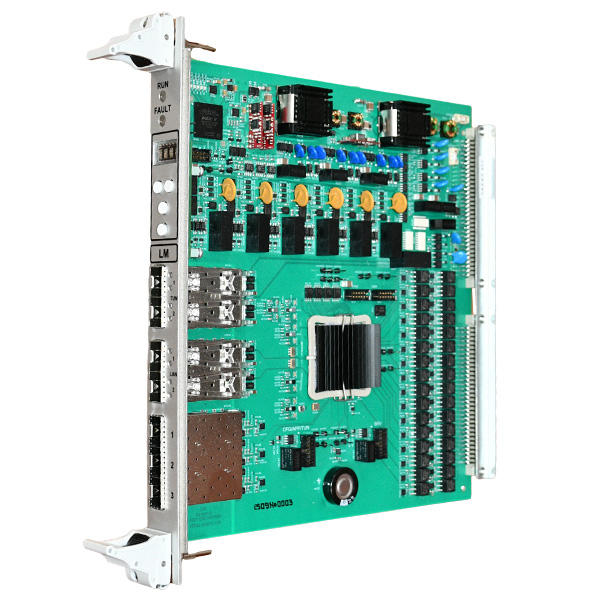
Logic Module |
LM |
The core of the Platform. FPGA consists of the two levels of function implementation - Platform Level and User Application Logic (can be changed in the process of system configuration). The module is the master and controls the operation of the entire channel (chassis). |
|
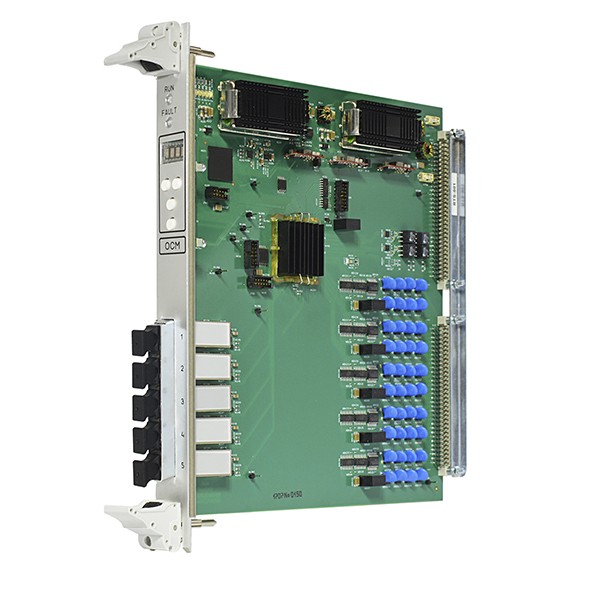
Optical Communication Module |
OCM |
Providing inter-channel communication via optical channels to develop (2, 3, and 4- 4-channel) systems. |
|
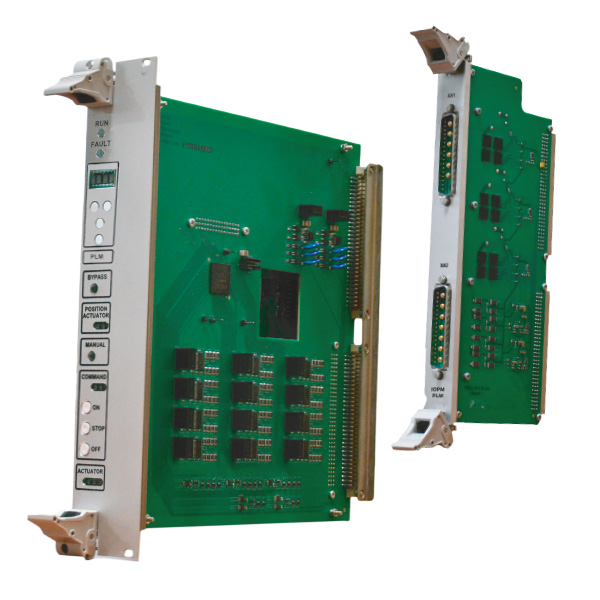
Priority Logic Module |
PLM |
Implementation of control command priorities between systems of different safety classes, majority processing of input discrete signals according to “1oo2”, “2oo2”, "2оо3" or "2оо4" (configurable during module setup). |
|
Resistance Temperature Detector Inputs Module |
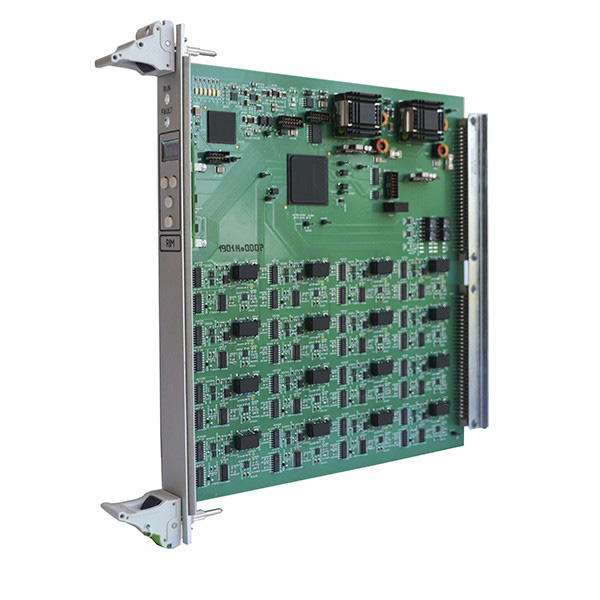
RIM |
Receiving resistance signals from temperature sensors of platinum type and copper type. |
|
Thermocouple Inputs Module |
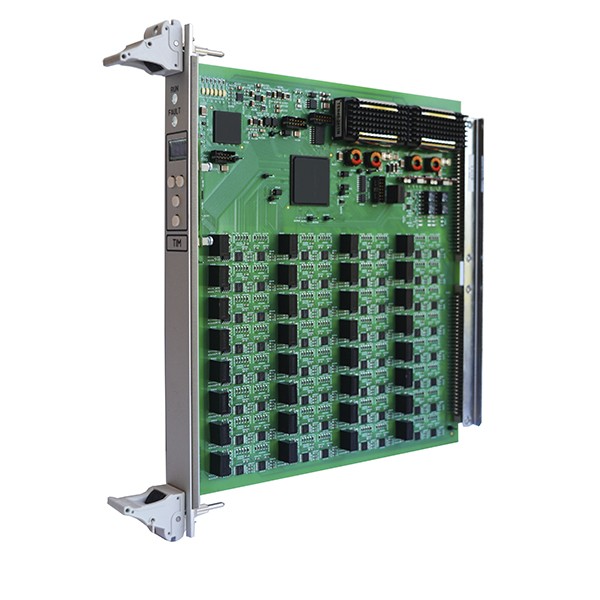
TIM |
Receiving low DC voltage signals up to 100 mV (including thermocouple voltages of various types). |
|
Wide Range Analog Inputs Module |
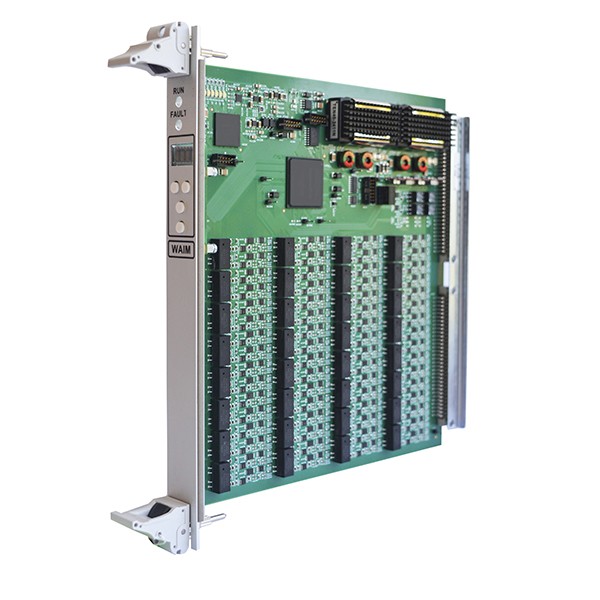
WAIM |
Receiving DC voltage signals up to 10V. |
|
Chassis |
Chassis |
Housing for RadICS modules providing power supply distribution, communication backplane, and installation slots for 1 Logic Module and up to 14 I/O or communication modules. |
|
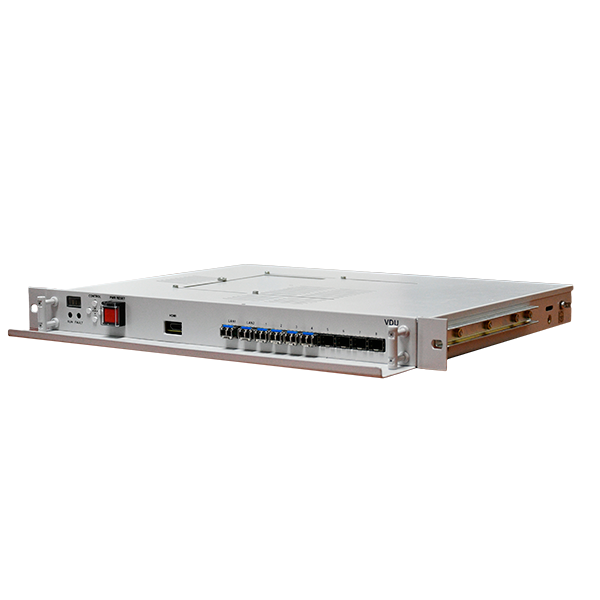
Radics Video Display Unit |
RVDU |
RVDU generates and displays complex video frames with detailed visualizations of system equipment, processes, and workflows. Data are displayed on any HDMI-compatible monitor, ensuring excellent image clarity and sharpness. |